

Every parent knows the search for meaningful activities that offer more than mere distraction for their children. Creative play-based learning addresses this need directly, understanding play as a natural learning process that is not only fun but also supports holistic development. Especially for parents in Germany who value imagination and fine motor skills, modern methods such as magnetic building blocks and project-based learning open up new avenues for specifically fostering their children's potential. Discover the advantages of playful learning without performance pressure , which strengthens children on all levels.
Table of contents
-
How magnetic building blocks promote imagination and motor skills
-
Safety, suitability for everyday use and added educational value
Key findings
| Point | Details |
| Creative play pedagogy | It promotes the holistic development of children through self-determined and free play and is a central learning process. |
| Magnetic building blocks | They are an effective toy for promoting motor skills, creativity and problem-solving strategies through intuitive learning. |
| Modern learning methods | Creative and interactive approaches support playful learning, developing social, emotional and cognitive skills. |
| Differences from traditional game systems | Creative play-based pedagogy relies on self-initiative and flexibility, while classic systems are rigid and rule-oriented. |
What does creative play pedagogy mean?
Creative play pedagogy is a holistic educational approach that comprehensively supports children's development through purposefully designed play experiences. Play-based educational approaches understand play not as mere entertainment, but as a central learning method for children.
The most important core elements of creative play pedagogy include:
-
Free and self-determined play
-
Fostering imagination and creativity
-
Developing social skills
-
Playful learning without performance pressure
-
Holistic support for child development
This educational approach focuses on the individual needs and interests of the child. Play is understood as a natural learning process through which children explore their environment, gain experience, and develop important skills.
Modern play-based pedagogy utilizes various theoretical approaches to systematically promote learning and imagination. It focuses not on predetermined learning objectives, but on guiding and supporting children's own independent activity.
Pro tip: Create a stimulating play environment for your child that encourages discovery and creative exploration.
Types of creative play and learning methods
Creative play and learning methods offer children diverse opportunities to learn playfully and promote their holistic development. Creative teaching methods activate children through interactive and varied approaches.
The most important types of creative learning methods include:
-
Playful-experimental learning
-
Artistic activities
-
Rhythmic-musical education
-
Project-based learning
-
Interactive group work
These methods focus on holistic development . They not only promote cognitive abilities, but also support the socio-emotional and motor development of children.
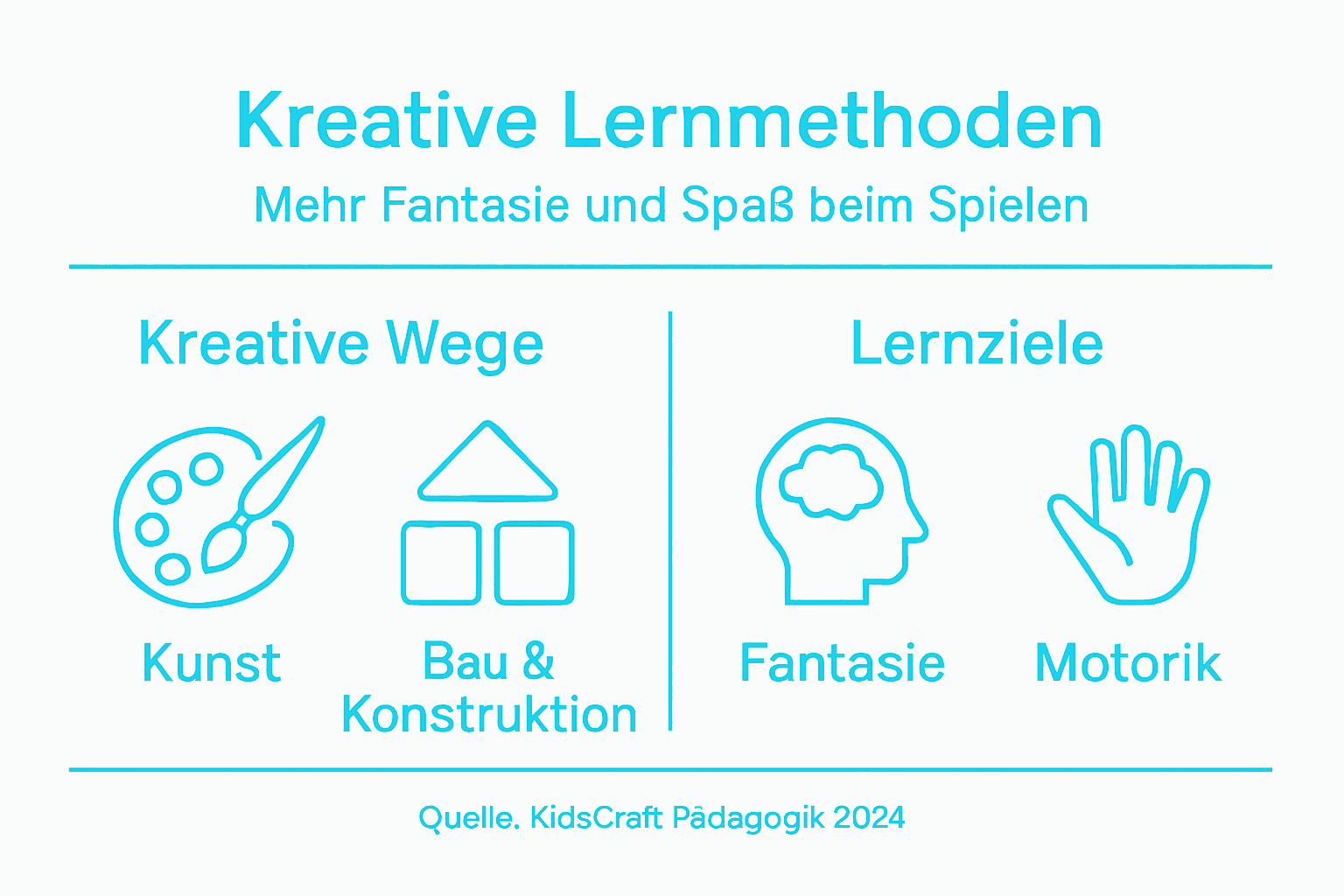
Each learning method pursues specific goals: While artistic activities stimulate creativity, rhythmic-musical exercises help develop coordination and expressiveness. Project-based learning, in turn, promotes teamwork and independent thinking.
Pro tip: Combine different creative learning methods to support your child holistically and individually.
How magnetic building blocks promote imagination and motor skills
Magnetic building blocks are an excellent educational toy that playfully supports children's development. They offer a fascinating way to stimulate creativity, motor skills, and logical thinking simultaneously.
The most important areas of development using magnetic building blocks include:
-
Promoting fine motor skills
-
Stimulation of spatial thinking
-
Developing creative problem-solving strategies
-
Strengthening hand-eye coordination
-
Fostering imagination and fantasy
Playing with magnetic building blocks allows children to intuitively learn complex spatial relationships. They experiment with different constructions, discover basic physical principles, and playfully develop their motor skills.
The modular structure of the magnetic building blocks allows children to create increasingly complex structures. From simple geometric shapes to imaginative constructions, they continuously expand their cognitive and manual skills.
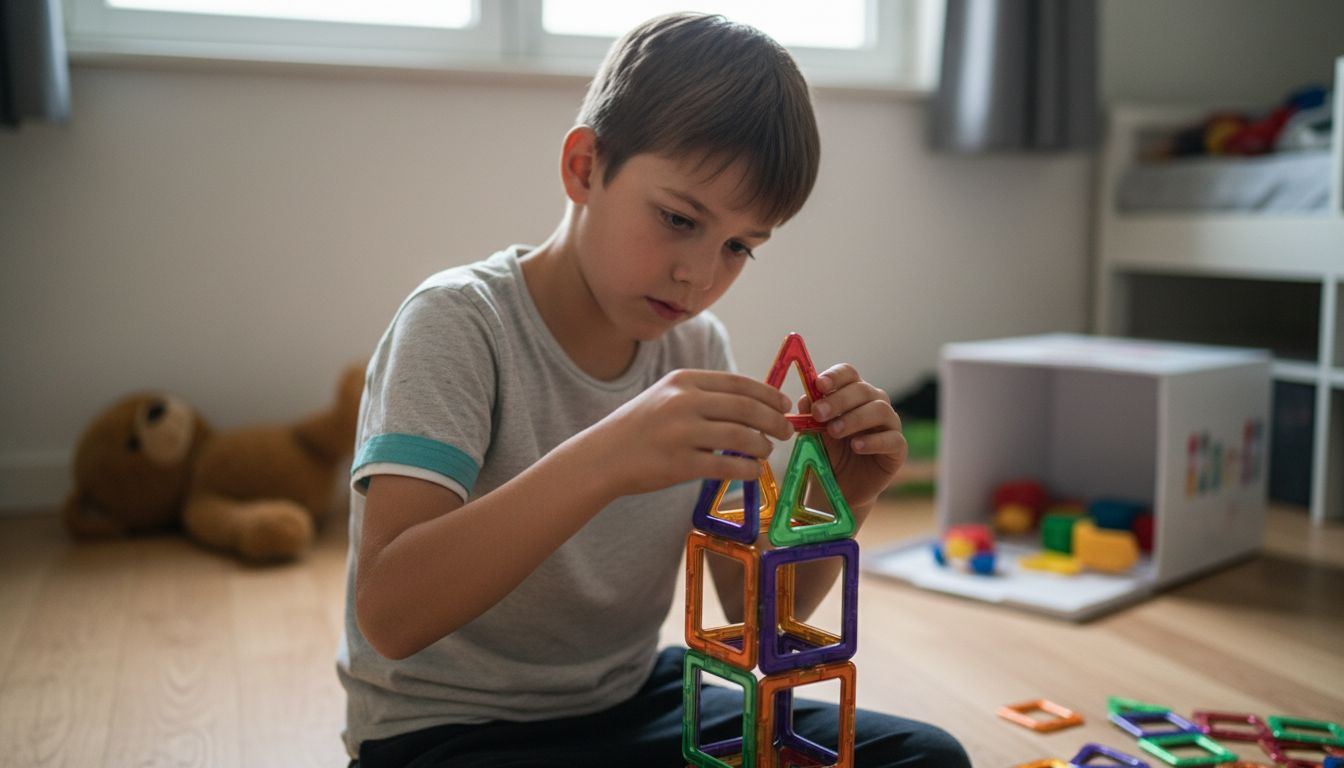
Pro tip: Give your child plenty of time and space to freely experiment with magnetic building blocks, without giving them too many instructions.
Safety, suitability for everyday use and added educational value
Educational magnetic building blocks are more than just a toy - they are a well-designed developmental tool for children that combines the highest safety standards with educational value.
The most important safety aspects and educational features include:
-
Designed for children aged 3 and up
-
Strong but safe neodymium magnets
-
Robust, child-safe plastic
-
Compatible with other series
-
Lightweight and stable to handle
The modular design allows children to playfully develop their motor and cognitive skills. They learn patience, understand cause and effect, and simultaneously train their fine motor skills.
Everyday usability here means more than just robustness – it's about a toy that lets children be creative anytime, anywhere. The magnetic building blocks are easy to transport, quick to assemble, and offer endless design possibilities.
The following table shows the advantages of magnetic building blocks compared to other educational toys:
| aspect | Magnetic building blocks | Other educational toys |
| Variety of combinations | Very high | Mostly limited |
| Promoting motor skills | Precise grasping movements | Depending on the type of toy |
| Learning effect physics | Magnetism and statics | Often less scientific |
| Suitability for travel | Lightweight and portable | Size and weight vary |
Pro tip: When buying magnetic building blocks, look for child-friendly safety features such as rounded edges and high-quality materials.
Comparison with classic playing systems and common mistakes
Play-based educational approaches differ fundamentally from traditional play methods due to their holistic and open developmental approach. In contrast to classic play systems with rigid rules and structures, they emphasize creativity and children's own initiative.
The most important differences between classic and modern game systems:
-
Degree of structuring
-
Focus on creativity vs. rule compliance
-
Self-determination of the child
-
Learning objectives and development promotion
-
Role of caregivers
Traditional game systems often prioritize predetermined gameplay, while creative play pedagogy gives children maximum freedom to shape their own actions. This allows for more individualized and holistic development.
Here you will find a concise comparison of classic and creative game systems:
| criterion | Classic playing systems | Creative play pedagogy |
| Adult control | Strongly predetermined | Accompanying, supportive |
| Room for personal initiative | Rather limited | High, individual |
| Learning objective focus | Strong results orientation | The learning process is the main focus. |
| Development of social skills | Mostly indirectly | Targeted |
| Flexibility in gameplay | Rules are central | Rules flexible, open |
Common mistakes in supervising play include over-controlling, lacking patience, and neglecting children's autonomy. Parents and educators should give children ample space for their own discoveries and experiments.
Pro tip: Observe your child while they play without constantly intervening, and let their imagination run wild.
Discover and specifically promote creative play with KidsCraft
Creative play pedagogy clearly demonstrates the importance of freedom, imagination, and self-directed learning for the holistic development of children. Many families face the challenge of finding educational toys that support motor skills and spatial reasoning without restricting children's initiative. This is precisely where KidsCraft comes in. Our magnetic building blocks are safe, robust, and modular, allowing children to create limitless construction worlds and playfully develop important skills.
Experience how your child develops their creativity with the KIDSCRAFT® ORIGINAL sets while simultaneously training fine motor skills and problem-solving abilities.
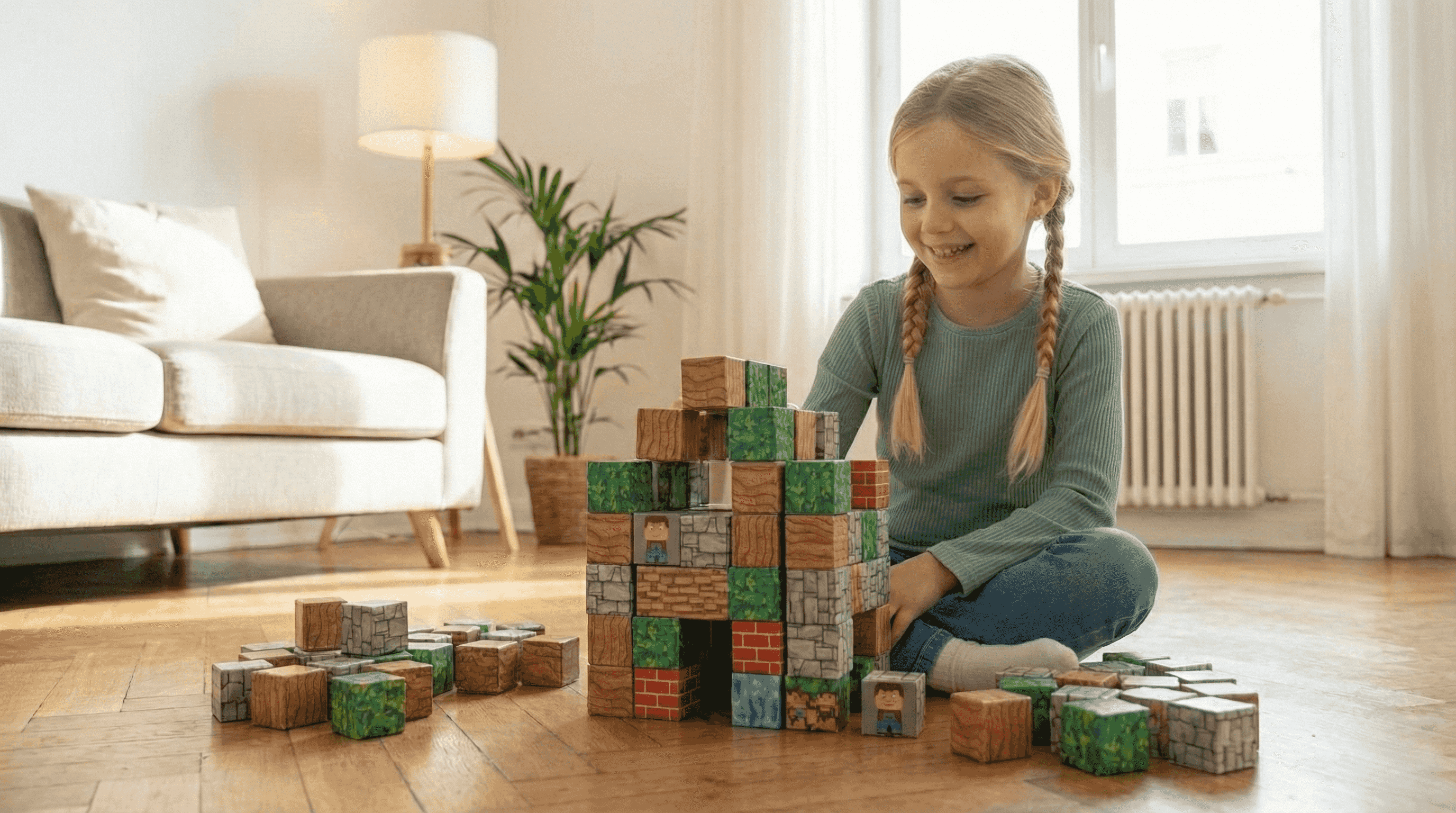
Take advantage of this opportunity and consciously encourage creative play with fun and educational bundles . Visit https://kidscraft-bausteine.de now and discover the perfect set for your family. Get active and give your child the right start today in a world of imagination full of playful learning moments.
Frequently Asked Questions
What is creative play pedagogy?
Creative play pedagogy is a holistic approach that supports children in their development through self-directed play and helps them develop social, motor and cognitive skills.
What are the advantages of magnetic building blocks for child development?
Magnetic building blocks promote fine motor skills, spatial reasoning, creativity, and problem-solving strategies. They offer a playful learning environment that encourages children to use their imagination.
How can parents implement creative play-based learning at home?
Parents can create a stimulating play environment where children can experiment and play freely. It is important to give children space for their own ideas and discoveries without giving them too many instructions.
What distinguishes creative play pedagogy from classic play systems?
In contrast to traditional game systems, which often include strict rules, creative play pedagogy promotes children's initiative and offers a flexible framework for creative and self-determined play.